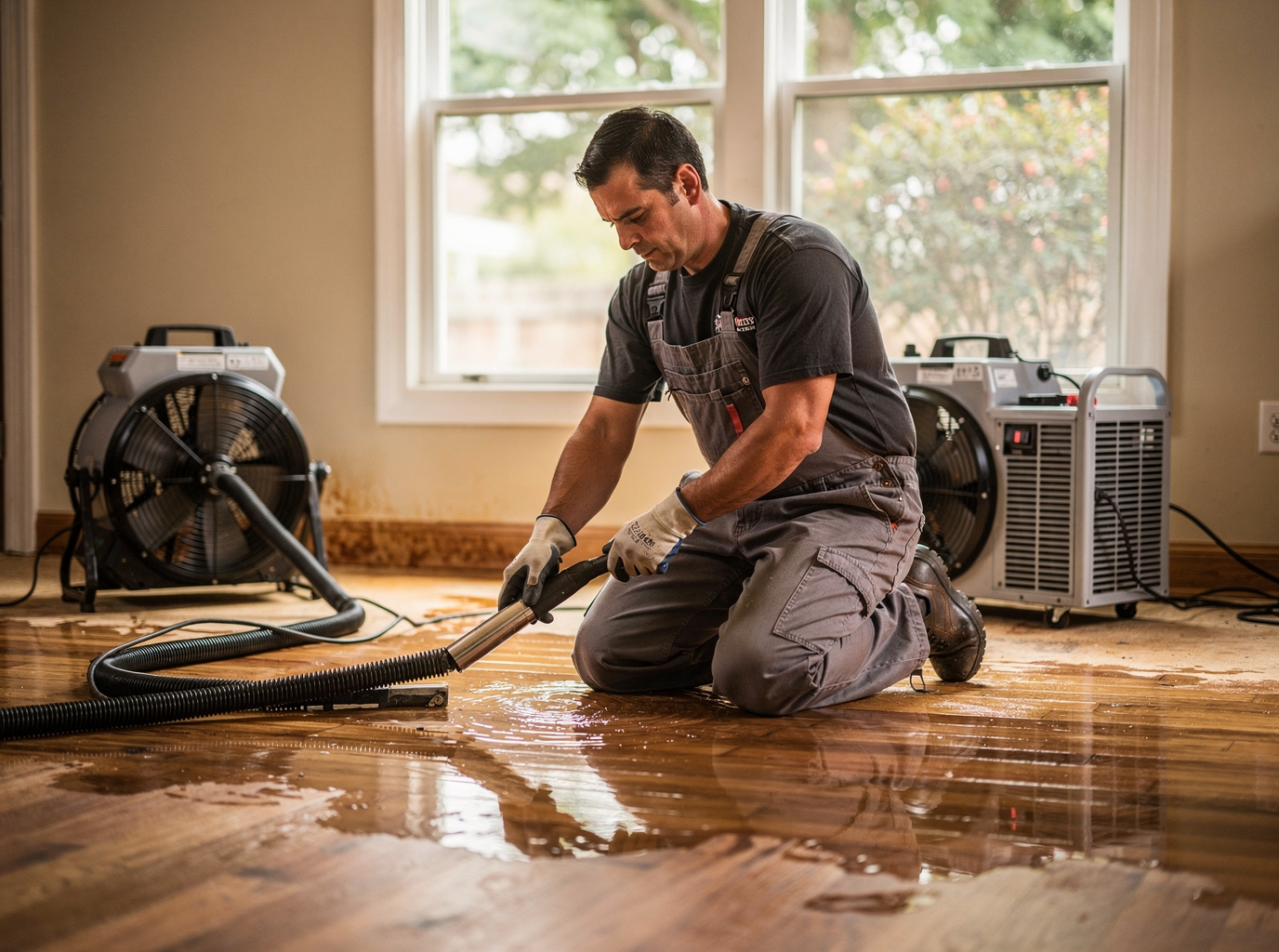
Jarrell sits along the I-35 corridor in northern Williamson County with a mix of established homes and newer subdivisions built during the past two decades. When pipes burst or storms dump heavy rain, water can travel quickly through slab foundations common here and reach drywall before homeowners notice. Our crew leaves Del Valle on I-35 north and reaches most Jarrell addresses in under 45 minutes, allowing us to extract water and set drying equipment the same day.
Spring rains and summer humidity both create repeat issues in Jarrell. Clay soils shift under lots off FM 487 and County Road 305, stressing supply lines and sewer connections. We see the same pattern in homes near Jarrell Elementary and along the frontage roads where drainage ditches fill fast. Our techs bring extra dehumidifiers for these humid conditions and check crawl spaces that many local builders left accessible for exactly this reason.
We focus on Jarrell properties first because the drive is straightforward and the damage patterns are predictable. Whether the call comes from a house near Jarrell High School or a newer build closer to the county line, we arrive with moisture meters and pumps sized for the slab-on-grade construction that dominates here.
Around Jarrell
We regularly work near:
- 📍Jarrell High School
- 📍Jarrell Elementary School
- 📍FM 487
- 📍I-35 frontage roads through Jarrell
- 📍County Road 305
Water Damage Restoration in Jarrell — Local Notes
- •Many Jarrell homes sit on clay-heavy lots that expand and contract, cracking supply lines under slabs and sending water into living spaces after heavy spring rains.
- •Newer subdivisions off I-35 often have tight side-yard access, so our smaller extraction units fit where larger trucks cannot reach backyard cleanouts.
- •Highway runoff along the frontage roads can back up into low-lying yards during summer storms, requiring extra perimeter drying that older rural lots rarely need.
- •Homes near Jarrell Elementary and along FM 487 frequently have attached garages that act as water entry points when ditches overflow, so we always inspect those slabs first.