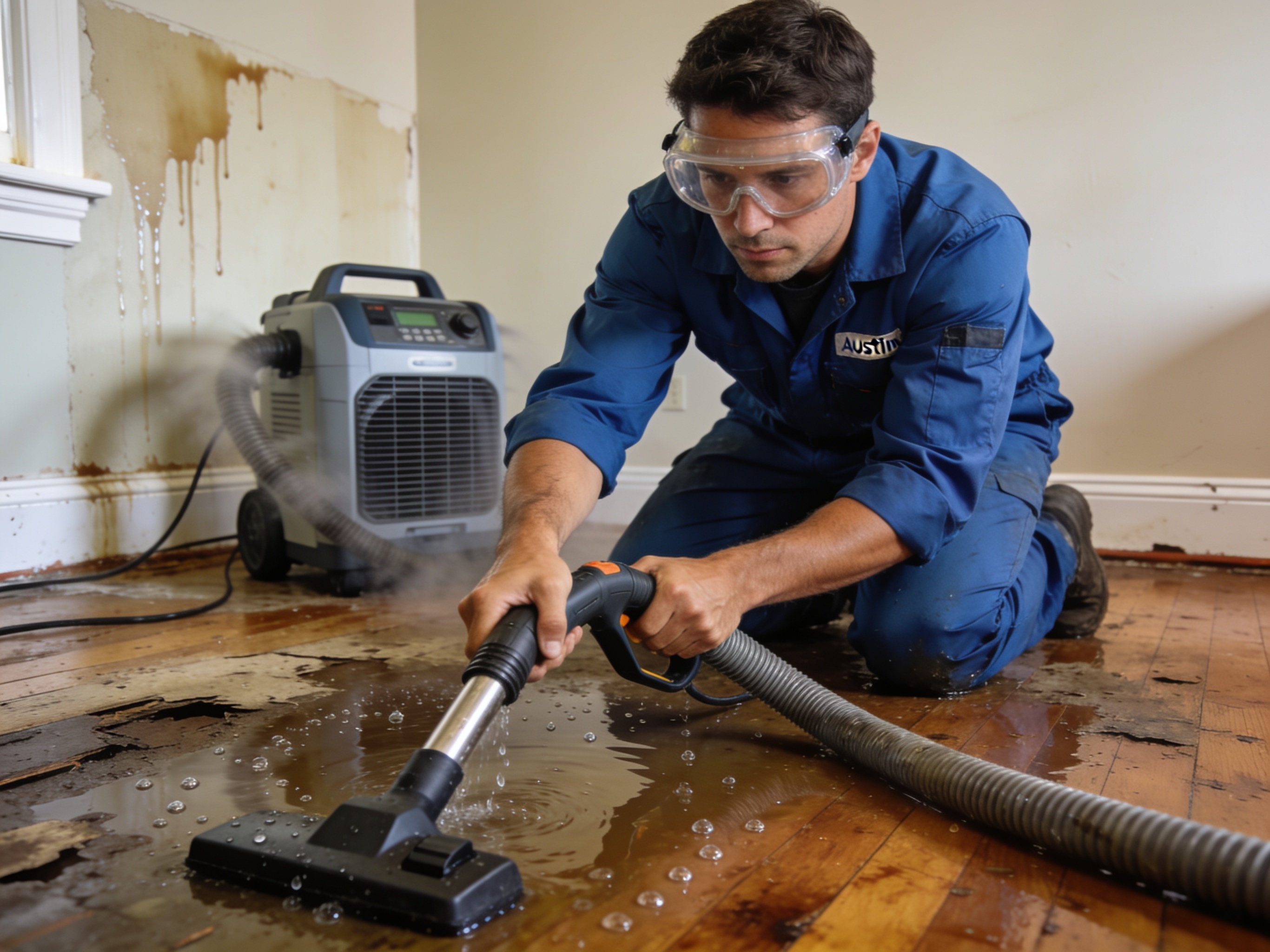
Austin's hot humid summers accelerate mold growth on drywall and subfloors once water sits even 24 hours. Older homes in Clarksville and Hyde Park often have balloon-framed walls and pier-and-beam foundations that trap moisture under hardwood floors, requiring targeted removal of baseboards and forced-air drying rather than simple surface fans. Travis County building codes now require moisture mapping documentation before any covered repairs, so skipping this step risks failed insurance claims on properties near Lady Bird Lake.
Flash flooding from Barton Creek or Waller Creek commonly affects South Congress and Travis Heights bungalows with low-grade lots. Slab foundations in newer Mueller and Barton Hills builds can hide water under tile, leading to hidden rot in adjacent cabinets if not dried with dehumidifiers rated for 80-plus percent local humidity. We route equipment through side yards to avoid damaging the limestone and native plant landscaping common in Westlake.
Mild winters with sudden spring rains create repeated small leaks around chimneys and skylights in University of Texas Tower-area rentals. These leaks often travel along rafters into multiple rooms before detection, so we use thermal imaging to trace the path instead of guessing. Nearby cities like Round Rock and Pflugerville see similar issues but with more clay soil movement that cracks foundations and directs water toward slabs differently than Austin's limestone terrain.
Technician insight
In Austin the thing that catches most people out with water damage repair is how quickly humidity turns a small pipe leak into hidden mold under pier-and-beam floors in Clarksville and Hyde Park homes. The clay and limestone mix around Lady Bird Lake also funnels water toward slabs faster than most expect, so we always check the crawlspace even when the leak looks contained upstairs.
East Austin Bungalow After Heavy Rain
A Travis Heights homeowner called after water entered through a foundation crack during a spring storm. We found moisture had traveled under the hardwood into two bedrooms and the kitchen subfloor. Extraction and three days of dehumidification prevented mold, and we replaced only the damaged sections without tearing out the entire floor.
Water Damage Repair Services We Offer
✓Emergency Water Extraction
Rapid removal of standing water from flooded rooms using truck-mounted pumps before mold sets in during Austin's humid summers.
✓Structural Drying and Dehumidification
Professional drying of walls, subfloors and cavities with industrial equipment sized for Travis County humidity levels above 70 percent.
✓Sewage Backup Cleanup
Safe extraction and sanitization of contaminated water from older East Austin and Clarksville sewer lines that back up after heavy rains.
✓Slab Leak Detection and Repair
Locating hidden slab leaks common in Barton Hills and Westlake homes then coordinating concrete repair and moisture removal.
✓Mold Remediation After Water Damage
Containment and removal of mold colonies that form quickly on drywall in humid Austin summers following any water event.
✓Basement and Crawlspace Drying
Targeted drying of pier-and-beam crawlspaces in Hyde Park and Travis Heights homes where trapped moisture leads to floor buckling.
Water Damage Repair Cost in Austin, TX
| Service | Typical Range | What Affects It |
|---|---|---|
| Category 1 water extraction | $800–$2,200 | Clean water from burst pipes; price rises with square footage and number of rooms |
| Category 3 sewage cleanup | $1,800–$4,500 | Contaminated water; includes biohazard handling and disposal fees |
| Slab leak drying package | $1,200–$3,000 | Includes detection, extraction and 72-hour monitoring on pier-and-beam or slab homes |
| Mold remediation add-on | $1,500–$5,000 | Required when humidity-driven growth appears within 48 hours; size of affected area drives cost |
Ranges are typical for Austin, TX and confirmed with an exact written quote before any work starts.
How it works
- 1
On-Site Assessment
We inspect affected rooms, map moisture with meters, and document for insurance while noting Austin-specific foundation types.
- 2
Water Removal
Truck-mounted extraction pulls standing water from floors and walls before humidity allows mold to start.
- 3
Drying And Monitoring
Industrial dehumidifiers and air movers run until readings drop below 15 percent, checked daily on site.
- 4
Restoration And Repairs
Replace damaged drywall, subfloor sections and trim, then coordinate with local trades for any plumbing fixes needed.
Pricing
Pricing varies by water volume, affected square footage, and whether mold remediation is required. We provide upfront written estimates after the initial assessment.