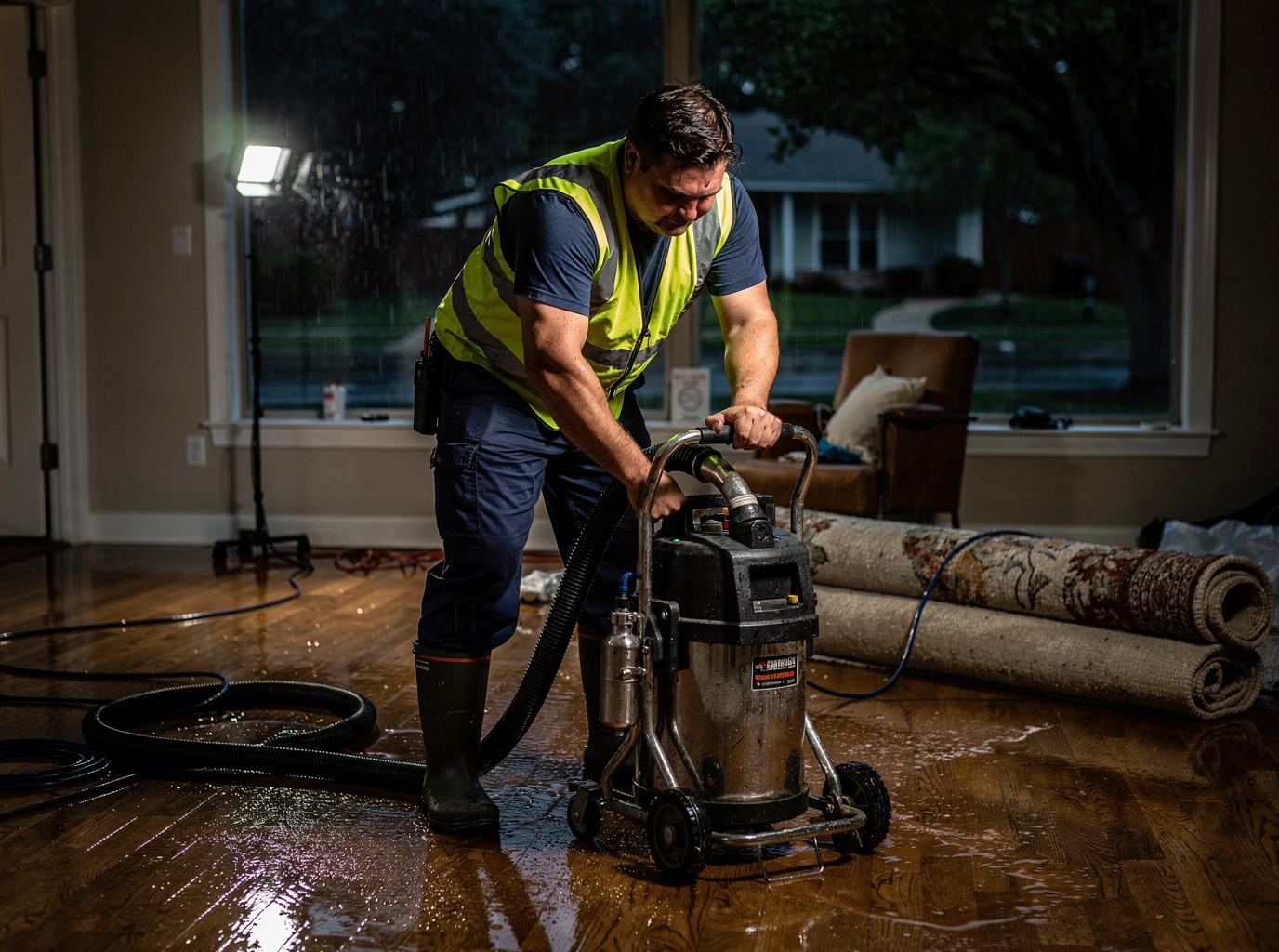
Austin’s hot humid summers turn small leaks into major problems fast, especially in older frame homes built before 1970 in Hyde Park, Clarksville, and Travis Heights. Moisture travels behind plaster and lathe walls, saturates original hardwood floors, and feeds mold within 48 hours when temperatures stay above 85 degrees. Crews must pull baseboards early and use moisture meters on every stud because the limestone soil under Barton Hills and Zilker keeps crawl spaces damp longer than newer subdivisions in Cedar Park or Round Rock.
Flash flooding from Lady Bird Lake and Waller Creek affects low-lying properties in East Austin and Mueller after heavy spring rains. Water enters through pier-and-beam foundations and travels under slab additions common in Westlake and Barton Hills. Extraction crews often have to cut access panels in finished ceilings to reach trapped water because many 1950s–1960s homes lack standard crawl-space doors. Delaying removal lets humidity from the Gulf push secondary damage into drywall that already carries lead paint in Clarksville and South Congress.
Travis County permitting rules require documentation of moisture levels before drywall replacement in rental properties, which adds steps when restoring apartments near the University of Texas Tower or Downtown high-rises. Technicians carry extra dehumidifiers on jobs in Pflugerville and Round Rock because those newer builds have tighter envelopes that trap moisture longer after a slab leak. Every job starts with photos and meter readings so homeowners can see exactly which materials must be removed versus dried in place.
Technician insight
In Austin, the thing that catches most people out with Emergency Water Damage Restoration is how fast humidity in the 80s turns a slab leak into mold behind baseboards in the 1940s–1960s homes around Hyde Park and Clarksville; the limestone soil holds moisture so long that you have to keep dehumidifiers running an extra day or two compared with newer builds in Round Rock.
Travis Heights Slab Leak
A homeowner in Travis Heights noticed warm floors after a sudden pressure drop. We found a pinhole leak under the 1962 slab that had saturated the subfloor and traveled into two adjacent rooms. Extraction and targeted drying prevented mold growth; only two sections of hardwood needed replacement instead of the entire living area.
Emergency Water Damage Restoration Services We Offer
✓Burst Pipe Emergency Extraction
Immediate water removal and drying after supply-line failures in homes across Hyde Park, Clarksville, and Travis Heights.
✓Sewage Backup Cleanup
Contaminated water extraction and disinfection following main-line backups common after heavy rains near East Austin and Mueller.
✓Roof Leak Containment
Tarping, interior drying, and ceiling repair after wind-driven rain or hail damage on older roofs in Zilker and Barton Hills.
✓Slab Leak Detection and Drying
Locating and drying water under concrete slabs in Westlake and South Congress homes where plumbing runs beneath finished floors.
✓Crawl Space Flood Remediation
Pumping, vapor barrier replacement, and dehumidification in pier-and-beam homes throughout Travis County after creek overflows.
✓Hidden Moisture Mapping
Thermal imaging and meter surveys to find trapped water behind walls and under cabinets before mold appears in humid Austin summers.
Emergency Water Damage Restoration Cost in Austin, TX
| Service | Typical Range | What Affects It |
|---|---|---|
| Initial Assessment And Documentation | $150–$300 | Higher when crawl-space or attic access is required |
| Water Extraction Per Room | $400–$900 | Increases with sewage contamination or carpet pad removal |
| Equipment Rental Per Day | $150–$350 | Number of air movers and dehumidifiers needed |
| Drywall Removal And Disposal | $250–$600 | Per wall section when hidden moisture is confirmed |
Ranges are typical for Austin, TX and confirmed with an exact written quote before any work starts.
How it works
- 1
On-Site Assessment
Technician arrives, documents moisture levels with meters, and marks affected materials in the specific rooms or crawl space.
- 2
Water Removal
Pumps and extraction wands pull standing water from floors, carpets, and wall cavities before it migrates further.
- 3
Drying And Dehumidification
Air movers and commercial dehumidifiers run until meter readings confirm the structure is dry, usually 3–5 days in summer humidity.
- 4
Restoration Hand-Off
Remove and replace damaged drywall or flooring, then coordinate with licensed trades for any electrical or plumbing repairs needed.
Pricing
Upfront written quotes after the initial assessment; final price depends on water volume, contamination, and how many rooms or structural cavities are affected.