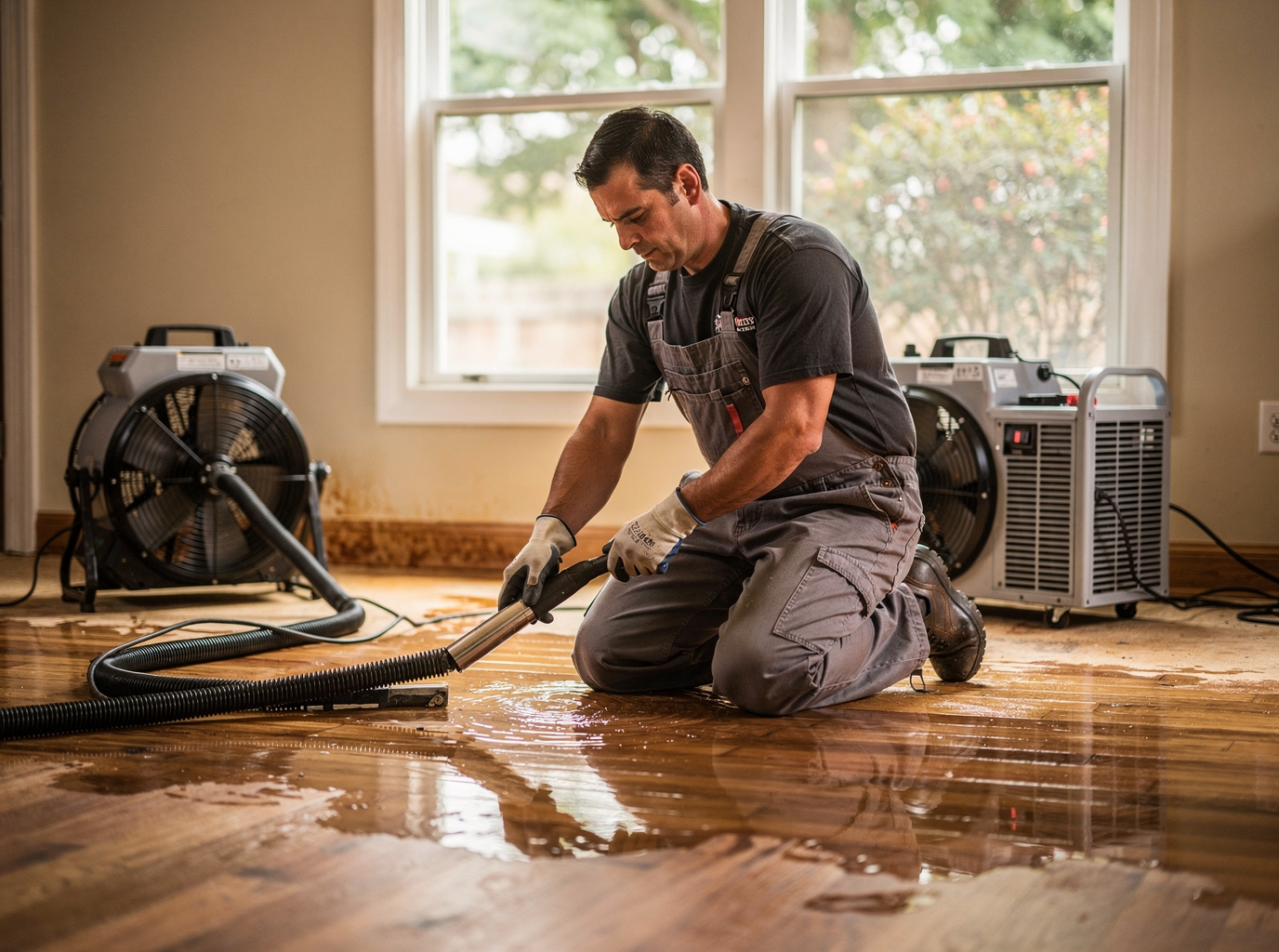
Austin's hot humid summers accelerate mold growth after any water intrusion, especially in older housing stock found in Hyde Park, Clarksville and Travis Heights. Homes built before modern moisture barriers often have plaster walls and hardwood floors that trap water along joists, requiring targeted demolition rather than surface drying. Properties near Lady Bird Lake and Barton Springs Pool face added risk from rising groundwater during heavy spring rains, while mild winters rarely freeze pipes but allow slow leaks to go unnoticed until damage spreads.
In neighborhoods like Zilker, Mueller and Barton Hills, slab foundations on expansive clay soils shift with moisture changes, turning small plumbing leaks into widespread subfloor saturation. Restoration crews must account for this movement when reinstalling finishes, and equipment placement is limited by narrow lots and mature tree cover common in Westlake and South Congress. East Austin bungalows with pier-and-beam construction need crawlspace access points checked early, because standing water there feeds into wall cavities faster than in newer slab homes in Round Rock or Pflugerville.
Technicians serving Downtown high-rises and multi-unit buildings in the University of Texas Tower area coordinate with property management for after-hours entry and elevator use during extraction. Dehumidification rates are adjusted higher than national averages because of Austin's persistent humidity, and all drying documentation is kept for Travis County insurance adjusters who require proof of moisture readings below 12 percent before closing claims.
Technician insight
In Austin, the thing that catches most people out with water damage restoration is how fast mold sets in during our humid summers once water reaches the clay soils under older pier-and-beam homes in Hyde Park or Clarksville; a small leak ignored for a week can force full subfloor replacement because the moisture never evaporates on its own.
Hidden Leak in Travis Heights Bungalow
A homeowner noticed buckling hardwood near the kitchen after spring rains. Inspection found a slow pipe leak that had saturated the pier-and-beam crawlspace and traveled into wall cavities. Extraction and targeted drying were completed over four days with equipment adjusted for local humidity, allowing original floors to be saved without full replacement.
Water Damage Restoration Services We Offer
✓Emergency Water Extraction
Rapid removal of standing water from flooded basements and crawlspaces in older East Austin and Hyde Park homes prevents further structural saturation.
✓Structural Drying and Dehumidification
Industrial air movers and dehumidifiers bring moisture levels down in humid summer conditions common across Travis County and nearby Cedar Park properties.
✓Ceiling and Wall Cavity Restoration
Targeted removal of wet drywall and insulation in South Congress and Zilker homes followed by drying and reinstallation to stop hidden mold growth.
✓Hardwood Floor and Subfloor Repair
Drying and refinishing of original wood floors in Clarksville and Barton Hills houses where clay soil movement has allowed water to reach the subfloor.
✓Crawlspace Water Mitigation
Inspection and drying of pier-and-beam foundations typical in Mueller and Travis Heights to address trapped moisture before it reaches living spaces.
Water Damage Restoration Cost in Austin, TX
| Service | Typical Range | What Affects It |
|---|---|---|
| Initial Assessment And Moisture Mapping | $150–$350 | Varies by home size and whether crawlspace entry is needed in Hyde Park or Clarksville. |
| Water Extraction | $400–$900 | Higher for multi-room jobs or properties near Lady Bird Lake with groundwater intrusion. |
| Equipment Drying (Per Day) | $250–$600 | Longer runs required during humid summer months in East Austin and Mueller. |
| Wall And Ceiling Drying | $300–$750 | Includes cavity access in plaster walls common in Travis Heights and Westlake. |
Ranges are typical for Austin, TX and confirmed with an exact written quote before any work starts.
How it works
- 1
On-Site Assessment
Technicians inspect affected rooms, measure moisture in walls and floors, and document conditions for Travis County insurance requirements.
- 2
Water Removal
Pumps and extractors clear standing water from slabs, crawlspaces and yards near Lady Bird Lake or Zilker Park.
- 3
Drying And Monitoring
Equipment runs until readings reach safe levels, with daily checks adjusted for Austin's summer humidity.
- 4
Restoration And Repairs
Damaged materials are replaced and finishes restored to match original construction in the specific neighborhood.
Pricing
Upfront quotes provided after inspection; final cost depends on square footage, water category, and access in older Austin neighborhoods.